
Bringing the era of the herbal revival to life
The Society of Herbalists (now The Herb Society) was founded in 1927, an era of herbal revival in Britain. Many of the women involved in the early work of the Society were born in the last quarter of the 19th century, and were young women as the century turned. Their adult lives were punctuated by two world wars and they witnessed social change on an astounding scale. The events and people surrounding them influenced their thinking, shaped their world view and channelled their choices and available options. Exploring the intertwining themes and movements of that period, we paint a picture of the world they navigated, helping understand what drove and inspired them to champion the cause of herbs.
Women’s education in late 19th/early 20th century Britain
After the Education Act (1870), the acceptance of women in education increased dramatically. Around this time Oxford and Cambridge universities began to allow women to attend, and gradually women’s colleges formed and even more slowly gained formal recognition. Actual degrees were granted by Oxford from 1920, but not by Cambridge until 1948. The foundations of women going to university were laid during the late 19th century, with botany and history considered suitable topics. Continuing education was an option that many more women were able to take and progress from to earn a living. The Bloomsbury set has become iconic of this age of female independence.
In a world with low levels of household convenience technologies, women’s lives typically revolved around the weekly cycle of time consuming household chores. All-female boarding houses came about to facilitate professional women’s working lives – something Virginia Woolf alluded to often. They could fill their time with study and projects, collect libraries, be entrepreneurs – some supported by their families, some completely independently. The 1925 Law of Property finally meant women could own property truly independently. The women in the herbal revival definitely fulfilled this ‘New Woman’ persona being independently minded and of independent means.
Herbal education
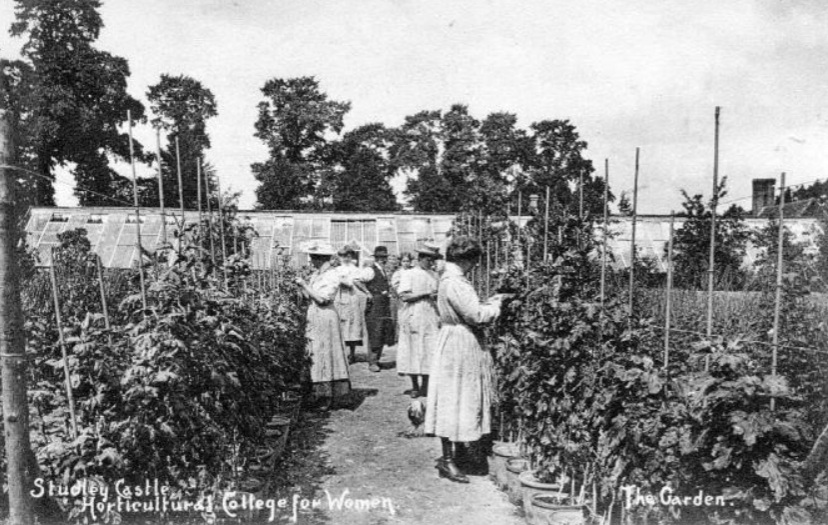
Horticultural Colleges with rich patrons, like Glynde in East Sussex and Studley in Warwickshire, were well established. Two-year courses taught horticulture as well as bee keeping, fruit preserving and carpentry, even dairy – all with an emphasis on going into business. Self-taught Maude Grieve linked into a local group of Studley graduates called the Daughters of Ceres, where she began to network and find her confidence. She set up her school in 1908, a medicinal plant nursery and training school. From 1911 she began to publish her pamphlets, writing into the early hours. These were sent to chemists and herbalists as well as growers. She also wrote the treatise Soil and its Care (1920). Through the First World War she led the way with herb growing and collecting for the war effort, as advised by the 1914 government pamphlet. During this time a great many societies and movements for women in agriculture and herbs came and went. Plants, small holdings and market gardening were now accessible to a much wider range of people, not purely aristocracy.
Progressive approaches to agriculture in early 20th Century Britain
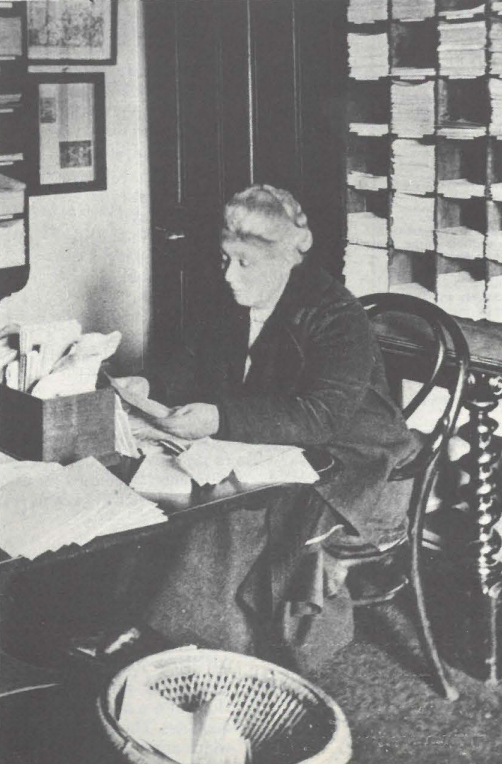
The Agricultural Depression in the late 19th century had been caused by the influx of American grain, poor harvests and failing techniques, leaving the countryside depleted. By 1914, the UK was importing 80% grain, 40% meat and 100% sugar. The government had chosen not to levy American tariffs, unlike the rest of Europe. Lady Eve Balfour, aged 21 in 1919, bought a farm where she trialled a more holistic approach to growing, culminating in 1946 with her book The Living Soil as she officially founded The Soil Society. Ruralism and environmentalism rallied against industry, pollution and awful living and working conditions in cities and factories. Having trained with Grieve throughout the war, Eleanour Sinclair Rohde (THS advisor) also created a large plant nursery business in Surrey from 1920, focussed on herbs and difficult to find wild species.
Progressive approaches to gardening in early 20th Century Britain
Arts and Crafts was in full flow around 1880-1920; William Morris and his followers created decorative and useful items in their highly distinctive style, preserving heritage crafts. There was also a strong green living element to the whole movement. Within the arts and crafts communities, “good life” experiments were taking place, with women often taking the helm. Olive Cockerell and Helen Nussey took on a plant nursery, logging their journey in A French Garden in England (1909), by turns practical, honest and whimsical (Beatrix Potter fans), their style was basically small holding with glass covers. Famous gardener Gertrude Jekyll was part of their group and shared similar passions with Vita Sackville-West (1892-1962) who published her pastoral epic The Land (1927), then went on to design the idyllic gardens at Sissinghurst. Both these women directly inspired and knew Eleanour Sinclair Rohde, as she went on to champion English roses and design gardens, also in the arts and crafts style, comprising effusive colour packed borders, garden rooms of yew, and brick paths and walls.
A time of change
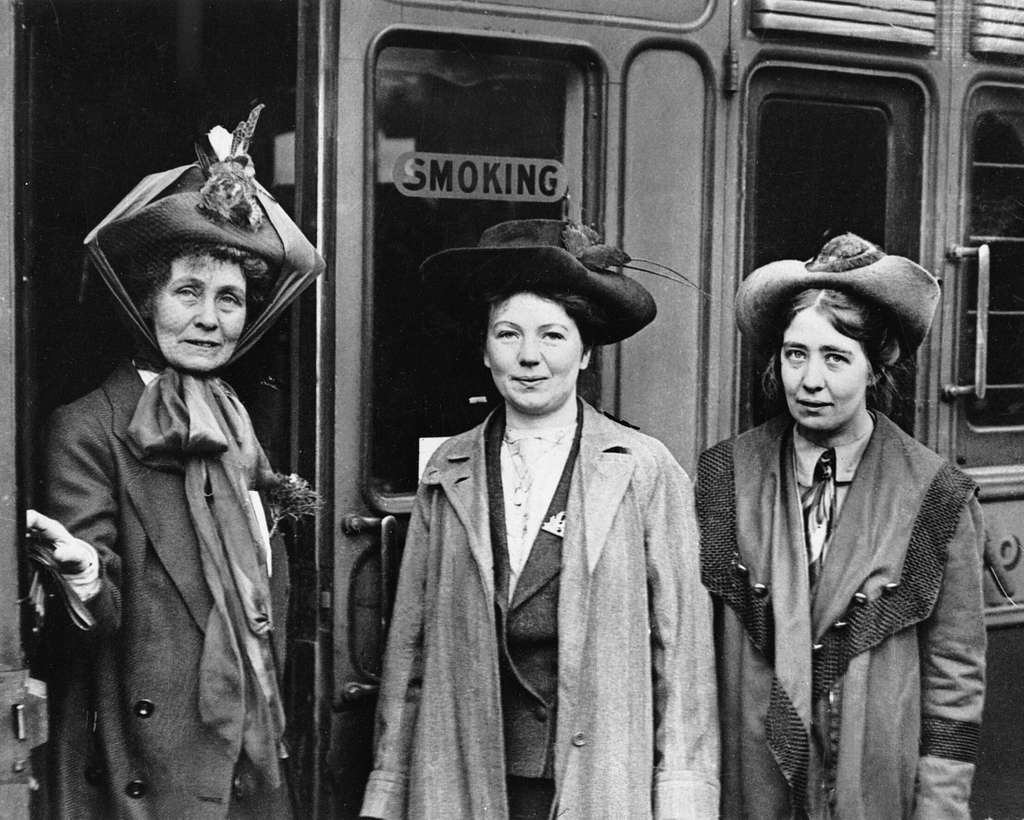
Bloomsbury was in full flow, with Virginia Woolf (1882-1941), EM Forster’s A Room with a View (1908) & Passage to India (1924), DH Lawrence’s Sons and Lovers (1913) and Women in Love (1920), Edith Wharton’s Buccaneers and the Reef (1938), to name a few. Political and social change was rife. Empire, as it had been, was crumbling, the mood shifting dramatically, and a high turnover of prime ministers (and monarchs) echoed that volatility. Not least the clamour of political conflict across Europe that would succumb to two world wars. And of course, Emmeline Pankhurst founded the Women’s Social and Political Union in 1903.
A time of beauty
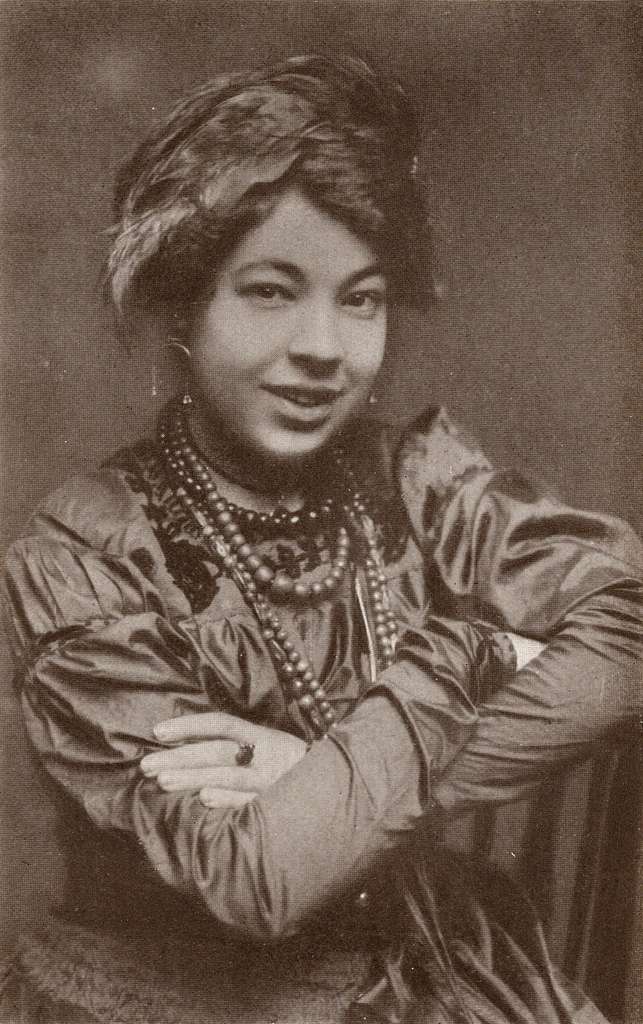
In the art world, the pre-raphelite romantic art of flora and fauna and magic was at its height from Rossetti & Burne-Jones, then Waterhouse. Long haired women, flowing dresses, flowers, myths – these themes continued to flourish in tandem with the neopagan revivals and folklore collectors. The style is echoed in the iconic Rider-Waite Tarot designed by Pamela Colman Smith published in 1910. Magic and paganism flowed through poetry and novels, blurred with more academic offerings, then came back again. Artist Estella Canziani, collaborator and friend of Eleanour Sinclair Rohde, was most famous for her Piper of Dreams image, a much printed poster during WW1. This was also the age of Wind in the Willows (1908) and Beatrix Potter – after the publication of Peter Rabbit (1902), she bought her Lake District home, Hilltop, in 1906 – beginning a lifetime committed to conservation of the landscape. The Flower Fairy artist Cecily Mary Barker first published in 1925, following on from Andrew Lang’s prolific fairy books from 1881-1913. Tapping into romantic mysticism was certainly key.
There was a deeper layer behind the pretty images where Gods and Goddesses abounded. Seeded by the Romantic poets and continuing to flourish through to the Great War, the concepts of the triple goddesses and Pan were marinating, ready for the Wiccan & neopagan leaps mid 20th century. Keats, Shelley, Byron and Swinburne led the Victorian literary craze that kept going through the Edwardian period. Novels and poems began with escapism, often sensational, even salacious – with supernatural beings enticing humans all over the place. Kenneth Graeme helped establish this vogue, his Pagan Papers (1898)began with Pan, spirit of the English countryside, in drowsy glades and twinkling hedgerows. Author Ronald Hutton wryly comments on this idealised landscape where no one was ever at work and the normal agricultural population were invisible. Regardless of the inconsistencies, people were searching for something. Rural yearning had become something to hold onto during the horrors of war and an ever-industrial age. Folklore and music collecting had become a valiant cause too, led by Vaughan Willaims (1872-1958) and Cecil Sharp (1859-1924), seeking to espouse an unchanged timeless rural ideal about to be lost.
Herbs for people
The folklore aspect of herbs in A Modern Herbal, providing details of how people interacted with herbs through time, was something to be embraced. Eleanour Sinclair Rohde was interested in that angle too – also described as a mystic – sometimes her tongue-in-cheek offerings included potions for fairy sighting. However, when presenting her first book Old English Herbals (1922) to the Folklore Society she paraphrased this part of her book, “There is only one way to look at understanding these old writers, and that is to forget ourselves entirely and try to look at the world of nature as they did. It is not ‘much learning’ that is required, but sympathy and imagination…In their writings… we see ‘as through a glass darkly’ a time when grown men believed in elves and goblins as naturally as they believed in trees… that natural objects were imbued with mysterious powers…”
Last glimpses
City living was really quite modern, but much outside that was following a slower pace still. Laurie Lee wrote on embarking his journey in 1934 “I was lucky… to have been setting out… in a landscape not yet bulldozed for speed. Many of the country roads still followed their original tracks, drawn by packhorse or lumbering cartwheel, hugging the curve of a valley or yielding to a promontory like the wandering line of a stream.” Edward Thomas (1878-1917) had captured this landscape, walking through the land, but his output of evocative poetry was cut short by war. Though the car was still a luxury, trains were very well established through this period, as were public buses. Travel to Europe off the beaten tracks was still possible. Folklore collector and artist Estella Canziani and Eleanour Sinclair Rohde set off together in 1920 to the Balearic Islands, noting that lands without cars, roads or any modernity were flashing into a modern haze with indecent haste. Estella logs costumes and customs with a genuine appeal to make sure we would remember, as they travelled so confidently into the unknown with no safety nets!
Second revival
In recent years, interest in foraging and bushcraft has risen massively. Allotment demand is higher than ever. Our understanding of wild nutrition and issues regarding farming constraints, not just F1 vegetables, is increasing due to projects like the Wildbiome Project and attention from many nature and health writers. Given climate changes, looking back to common species and lost edible perennials offers much scope. People want true connections with their local natural habitat, and control and ownership of this knowledge, with a real ethic behind it. Our founders understood so much of this, even back then, and this is a timely reminder not to take these things for granted. We’ve been here before!
References
Alicia Carroll New Woman Ecologies – From Arts and Crafts to the Great War and Beyond – Uni of Virginia Press, 2019.
Francesca Wade Square Haunting – Faber & Faber 2020.
Ronald Hutton The Triumph of the Moon – OUP 1999.
Eleanour Sinclair Rohde The Old English Herbals, Medici Press 1922.
Claire de Carle Maud Grieve – Claire de Carle 2017.
Barbara Griggs Green Pharmacy – Healing Arts Press 1981.
Catherine Horwood Gardening Women – Their stories from 1600 to the present, Virago Press 2010.
Maud Grieve A Modern Herbal, Jonathon Cape 1931.
Laurie Lee As I Walked out One Midsummer Morning, Andre Deutsch 1969.
Estella Canziani – Round About Three Palace Green, Methuen 1939.
Olive Cockerell & Helen Nussey A French Garden in England, Steads Publishing House, 1912.
NFU Report The Many That Fed The Few, 2014
www.nfuonline.com/the-many-that-fed-the-few-ww1-report/
Jane Adams Revisiting Home Fronts, Gender, War and Conflict pt 2, 2014.
Lizzie B Stories of early business women who broke the mould, 2021
Thanks to Kathryn Daszkiewicz for proof reading and checks.